
Most people hear about cataracts or dry eye long before anyone mentions keratoconus. It’s a condition that changes the shape of the cornea, and it tends to appear in younger patients whose vision keeps changing between visits.
Keratoconus affects about 1 in 2,000 people, which makes it uncommon without being rare. That’s often enough that our optometrists watch for early signs during comprehensive eye exams.
What Keratoconus Does to Your Eye
Your cornea is the clear dome at the front of your eye, and it does most of the focusing before light reaches the lens. With keratoconus, that dome thins and bulges forward into a cone shape.
Light hitting a cone-shaped cornea scatters instead of landing in one clean point on the retina. Vision goes blurry and distorted at both near and far distances.
So a new prescription may sharpen things for a few months and then stop doing much. The lens in front of your eye can only do so much when the surface behind it keeps changing.
Signs to Watch For
Early keratoconus looks a lot like an ordinary prescription change, which is part of why it goes unnoticed for years. Bring up any of these at your next appointment:
- Blurry or wavy vision that new glasses don’t fully correct
- Halos, streaks, and glare around headlights after dark
- Sensitivity to bright light and sunlight
- A prescription that changes every few months
Keratoconus Risk Factors and When It Starts
Family history is one of the clearest links we know of. If a parent or sibling has keratoconus, tell your optometrist, and they can take a closer look at your corneas. Hard, frequent eye rubbing is another.
A handful of health conditions show up alongside keratoconus more often than chance would explain:
- Seasonal or year-round allergies
- Asthma
- Eczema
- Down syndrome
- Connective tissue disorders such as Ehlers-Danlos syndrome
At What Age Keratoconus Tends to Progress
It often starts in the teen years or early 20s, which is one reason a high schooler who needs a new prescription every few months deserves a closer look.
Changes can keep going into the 30s. After about 10 to 20 years, the changes typically slow down.
How an Optometrist Checks for Keratoconus
Testing starts with a full eye exam, including a look at how well you read letters at different distances and how much your prescription has changed since your last visit.
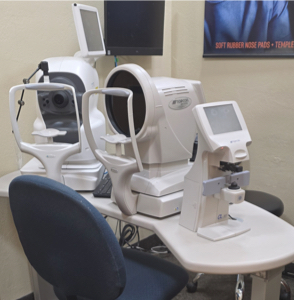
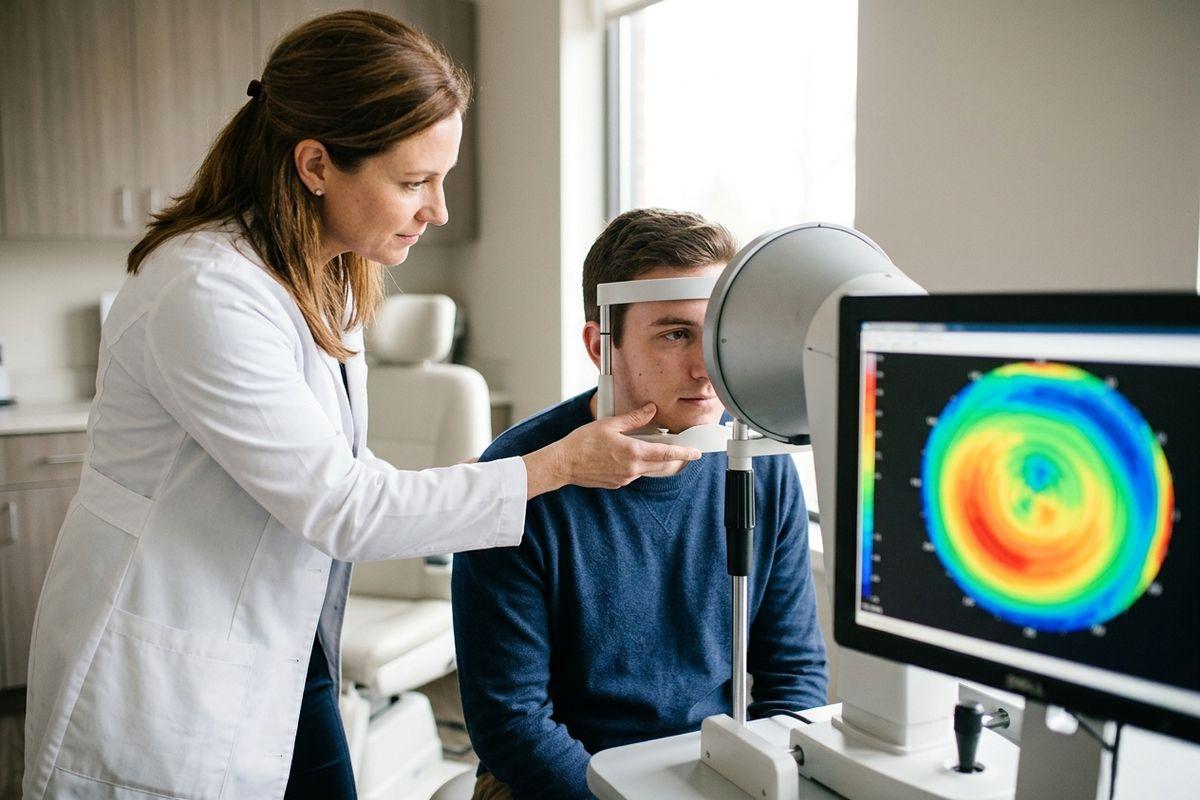
From there, corneal topography maps the surface of your cornea and shows where it has thinned or steepened. The map gives us a measurable record of what’s happening, not just a general description of blurry night driving.
Follow-up visits matter just as much. Comparing today’s map with one from a year ago shows the team whether anything is changing and how quickly.
Keratoconus Treatment Options
Care depends on how much your cornea has changed, and there’s more than one route forward. Here’s what we may talk through with you:
- Glasses or soft contact lenses for mild cases
- Rigid gas permeable, hybrid, or scleral lenses when soft lenses blur or feel uncomfortable
- Corneal crosslinking, a procedure that strengthens corneal tissue and may slow further steepening
- Corneal ring segments, which can flatten the surface and improve how a lens sits on the eye
- A corneal transplant for advanced cases
Crosslinking often comes up early in the conversation because it targets the progression itself. Lenses correct what you see today, while crosslinking aims at what your cornea does next.
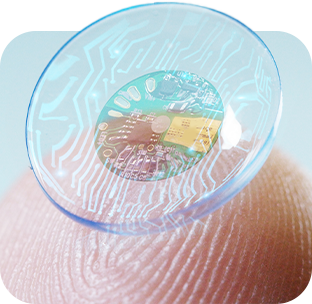
Scleral lenses deserve some extra focus. They vault over the cornea and rest on the white of the eye, creating a smooth surface for light to pass through, and many patients find them comfortable even after long days.
Living with Keratoconus Day to Day
Most people with keratoconus go about an ordinary week with few interruptions. Lenses handle the correction, and appointments become part of the routine.
Small habits help. Treating allergies can reduce the urge to rub your eyes, and lubricating drops can ease grittiness before you think about using your knuckles.
Finding it early can open up more options. Regular checkups let us track your vision over time and update your lenses as your corneas change. And bring your questions with you. Ask what your topography map shows, ask what a small change over 12 months means, and ask what we’d watch for next time.
Schedule a Keratoconus Screening
If night driving has gotten harder or your prescription keeps changing, come see us. Our optometrists at Stanislaus Vision Associates can map your corneas, explain the results, and talk through which options fit your vision and your schedule.
Book your appointment now, and bring whatever family history you know of with you. Those details tell us where to look first.